Sage Becker · 8 September 2026
After-School Board Game Clubs Drive Measurable Gains in Elementary Social Skill Development
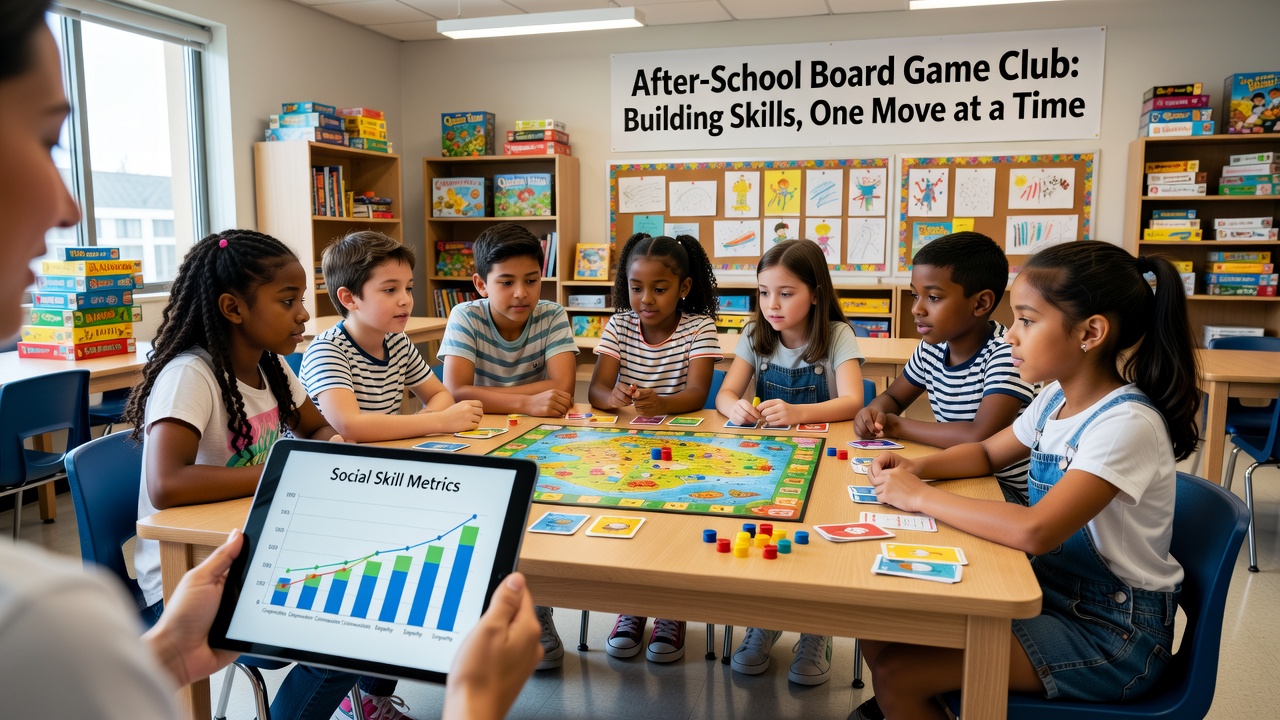
After-school board game clubs have expanded across elementary schools in multiple districts since 2024, with program coordinators reporting structured activities that target specific social competencies including communication, cooperation, and conflict resolution. These clubs operate outside regular classroom hours and incorporate games selected for their emphasis on player interaction rather than solitary play. Data collected through standardized observation rubrics show consistent patterns in skill acquisition among participants aged six to eleven.
Program Structure and Implementation Patterns
Schools in urban and suburban regions have adopted similar formats where sessions run two to three times weekly for forty-five to sixty minutes, and trained facilitators guide groups of eight to twelve students through rule explanations, gameplay, and post-session debriefs. Games such as cooperative titles and strategy-based options require verbal negotiation, shared decision-making, and adherence to turn order, elements that align directly with social skill benchmarks used in educational assessments. In September 2026 several districts plan to integrate digital tracking tools that log frequency of positive peer interactions during each meeting.
Observers note that initial participant screening often includes baseline evaluations of social metrics drawn from teacher reports and peer nomination surveys, while follow-up measurements occur at eight-week intervals. This approach allows programs to isolate changes attributable to club participation rather than general classroom exposure.
Key Social Skill Metrics Under Evaluation
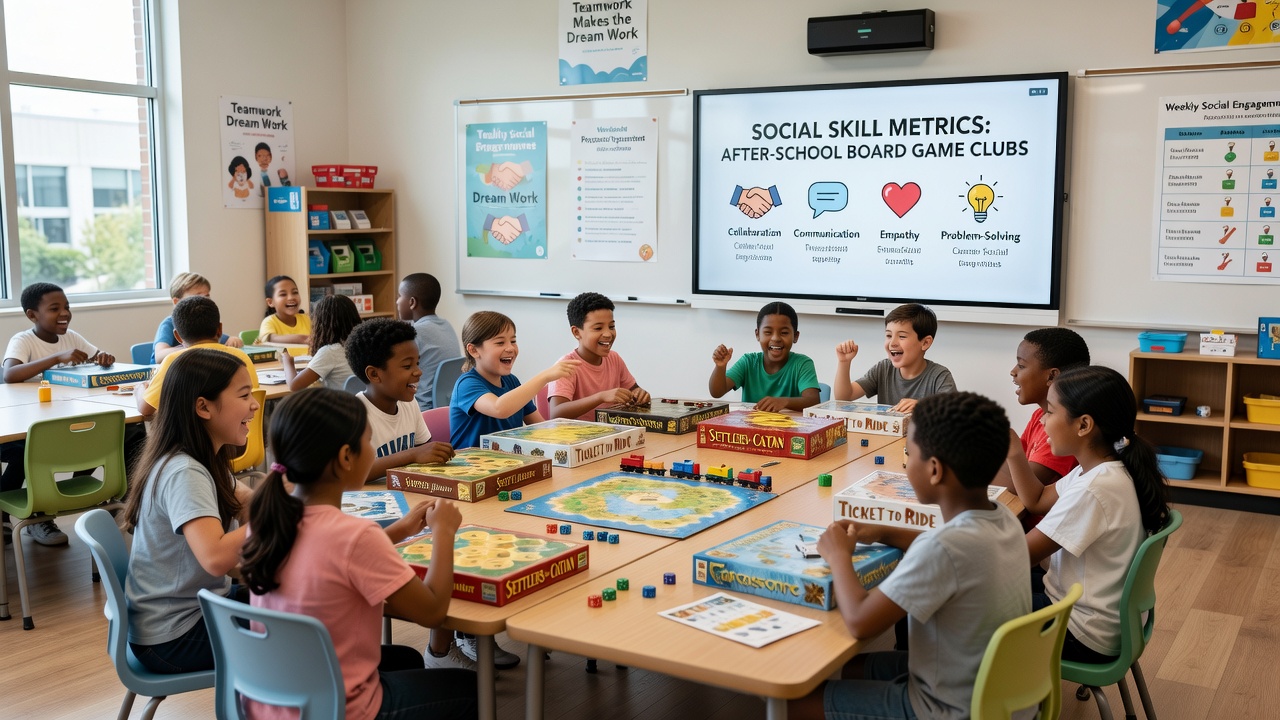
Research indicates that metrics tracked in these settings typically fall into categories of verbal communication frequency, perspective-taking accuracy, and collaborative problem-solving success rates. Studies conducted by university-affiliated education labs have applied validated instruments such as the Social Skills Improvement System to quantify shifts, and results from cohorts exceeding five hundred students reveal average increases of fifteen to twenty-two percent in composite social skill scores after one semester of consistent attendance.
Turn-taking compliance and emotional regulation during competitive moments represent additional focal points, with facilitators documenting instances of rule disputes and subsequent resolutions. Evidence suggests that repeated exposure to games demanding alliance formation correlates with higher rates of prosocial statements among participants compared to control groups engaged in unstructured recess activities.
Geographic Variations and Supporting Data
Implementation differs by region yet yields comparable outcomes. Canadian school boards have incorporated board game clubs into after-school enrichment grants, while Australian education departments have piloted similar initiatives tied to national wellbeing frameworks. Figures from a 2025 multi-site evaluation coordinated across three provinces demonstrate that students attending at least twenty sessions exhibited statistically significant improvements in peer-rated empathy scores.
One district in the Midwest United States reported parallel findings through its partnership with local recreation centers, where attendance logs paired with quarterly social assessments indicated reduced disciplinary referrals related to peer conflicts among club members. Those who've examined longitudinal records point to sustained benefits extending into the following academic year for students who maintained regular participation.
Integration With Broader Educational Goals
Administrators frequently align club objectives with existing social-emotional learning standards, and several states now list board game participation as an acceptable activity under extended learning opportunity guidelines. Teachers who receive summary reports from club facilitators often adjust classroom grouping strategies to leverage observed peer dynamics. Data shows that schools combining these clubs with brief in-class reflection periods achieve faster consolidation of practiced skills.
Case examples include a suburban network where parent volunteers received training in observation protocols, which produced supplementary datasets confirming facilitator notes on increased spontaneous helping behaviors. Researchers discovered that games requiring resource sharing produced the strongest associations with later measures of generosity in unrelated classroom tasks.
Future Tracking and Expansion Plans
Upcoming evaluations scheduled for the 2026-2027 school year will incorporate wearable sensor data to capture nonverbal cues during gameplay, building on pilot work completed in select European programs. Policymakers have begun reviewing aggregated metrics to determine funding allocations, and preliminary models project that scaled adoption could reach an additional 150,000 elementary students by 2028. External analyses from organizations such as the U.S. Department of Education continue to monitor these developments for potential inclusion in federal after-school program guidelines.
Conclusion
Board game clubs operating after school hours supply structured environments where elementary students practice and refine measurable social competencies, with accumulating evidence from varied regions confirming consistent directional improvements across multiple assessment tools. Continued documentation through 2026 and beyond will clarify the durability of these gains and inform refinements in game selection and facilitation techniques.