Noah Franke · 7 September 2026
Geography Proficiency Rises in Rural Schools Using Custom Watershed Board Games
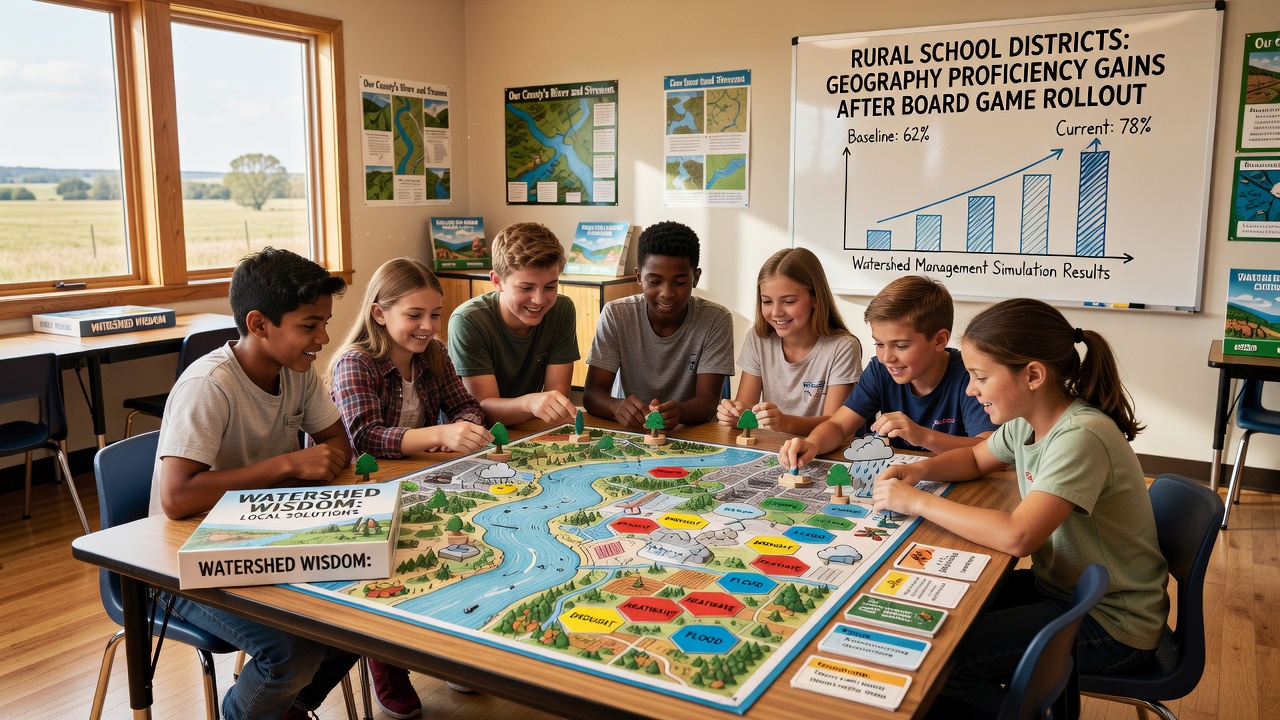
Rural school districts across several regions have documented measurable increases in geography proficiency scores following the introduction of custom board games designed to simulate local watershed management and climate adaptation challenges, with data collected through standardized assessments showing consistent upward trends since programs began rolling out in 2024.
Implementation Across Multiple Districts
Schools in areas such as the Midwest United States and parts of eastern Europe developed these games in partnership with local environmental agencies and curriculum specialists, incorporating real geographic data including river basins, flood zones, and seasonal precipitation patterns into gameplay mechanics that require players to balance resource allocation, infrastructure decisions, and long-term climate resilience strategies. Teachers integrated the board games into existing geography units rather than treating them as standalone activities, allowing students to apply concepts like elevation mapping and ecosystem connectivity during regular class sessions while district administrators tracked progress through pre- and post-intervention testing administered each semester.
One district in Nebraska reported that average geography test scores rose by 12 percentage points over two academic years after students began using the watershed simulation games, while similar programs in Polish countryside schools noted parallel gains in student ability to interpret topographic maps and predict climate-related land use impacts. The games emphasize decision-making under uncertainty, such as choosing between short-term agricultural expansion and riparian buffer zones that reduce erosion during extreme weather events, and this approach aligns with broader educational efforts to connect classroom learning with tangible local environmental issues.
Data Collection and Proficiency Tracking
Administrators compiled results from state-mandated geography assessments alongside custom rubrics that evaluated student understanding of watershed dynamics, with figures revealing that participation correlated with improved performance on questions involving spatial analysis and climate adaptation planning. In September 2026, a multi-district review compiled by regional education offices highlighted that rural students using the board games outperformed peers in control groups on tasks requiring identification of flood-prone areas and evaluation of adaptation measures like wetland restoration. Researchers from participating universities noted that the hands-on format helped bridge gaps often observed in rural settings where access to advanced simulation software remains limited, and they pointed to qualitative feedback from educators describing increased student engagement during lessons on topics such as groundwater flow and land-use zoning.
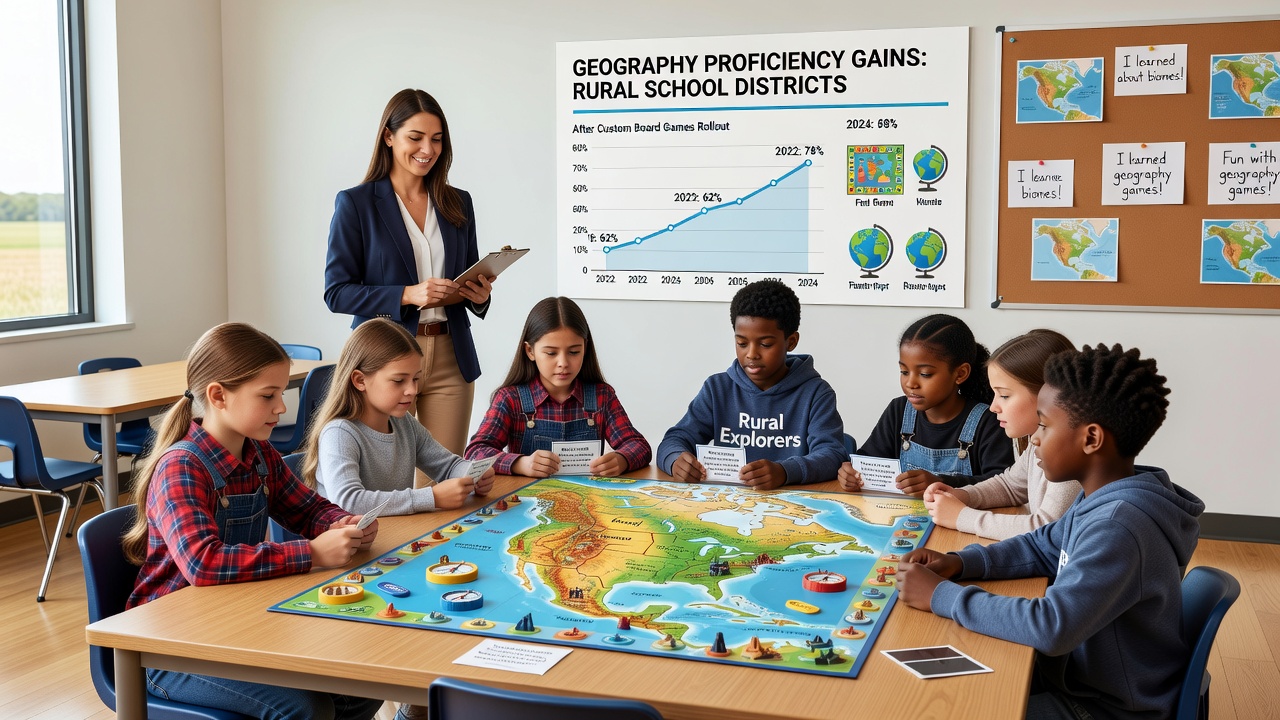
According to the U.S. Environmental Protection Agency, watershed education resources emphasize the value of interactive tools for building spatial literacy, and the custom games drew from these principles by scaling scenarios to reflect specific county-level hydrology data. Meanwhile, reports from European partners referenced frameworks developed by the European Environment Agency that stress adaptive management in rural landscapes, allowing the board games to incorporate elements relevant to both American plains states and Central European river valleys without requiring separate development tracks. The approach avoids generic content in favor of hyper-local details, such as incorporating actual tributary names and historical flood records, which researchers found strengthened student retention of geographic terminology and processes.
Broader Educational Context and Outcomes
Observers tracking these initiatives have documented that the games also supported cross-curricular connections, with science teachers noting improved student discussions around climate variables and math instructors observing stronger application of probability concepts when students calculated risk scenarios during gameplay. Districts reported modest but steady reductions in achievement gaps between rural and urban peers on standardized geography sections, attributing part of the shift to the accessibility of physical board games that require no specialized technology beyond printed components and dice. External evaluations conducted by independent curriculum analysts confirmed that the simulation elements encouraged iterative learning, where students revisited earlier decisions after observing simulated outcomes like increased sedimentation or aquifer depletion, fostering a deeper grasp of cause-and-effect relationships in environmental systems.
What's notable is how the programs scaled through teacher networks rather than top-down mandates, with early adopters sharing design templates that other rural districts adapted to their own watersheds, leading to a growing library of localized game variants. Data from these efforts continue to feed into larger studies on experiential learning methods, particularly those examining how tactile simulations compare with digital alternatives in resource-constrained settings.
Conclusion
The documented gains in geography proficiency across participating rural districts illustrate how targeted board game interventions can reinforce core academic skills while addressing regionally specific environmental topics, with ongoing data collection expected to clarify long-term retention rates and potential applications in other subject areas. Continued collaboration between educators, local agencies, and game designers will likely shape future iterations, ensuring the tools remain aligned with evolving climate data and curriculum standards.