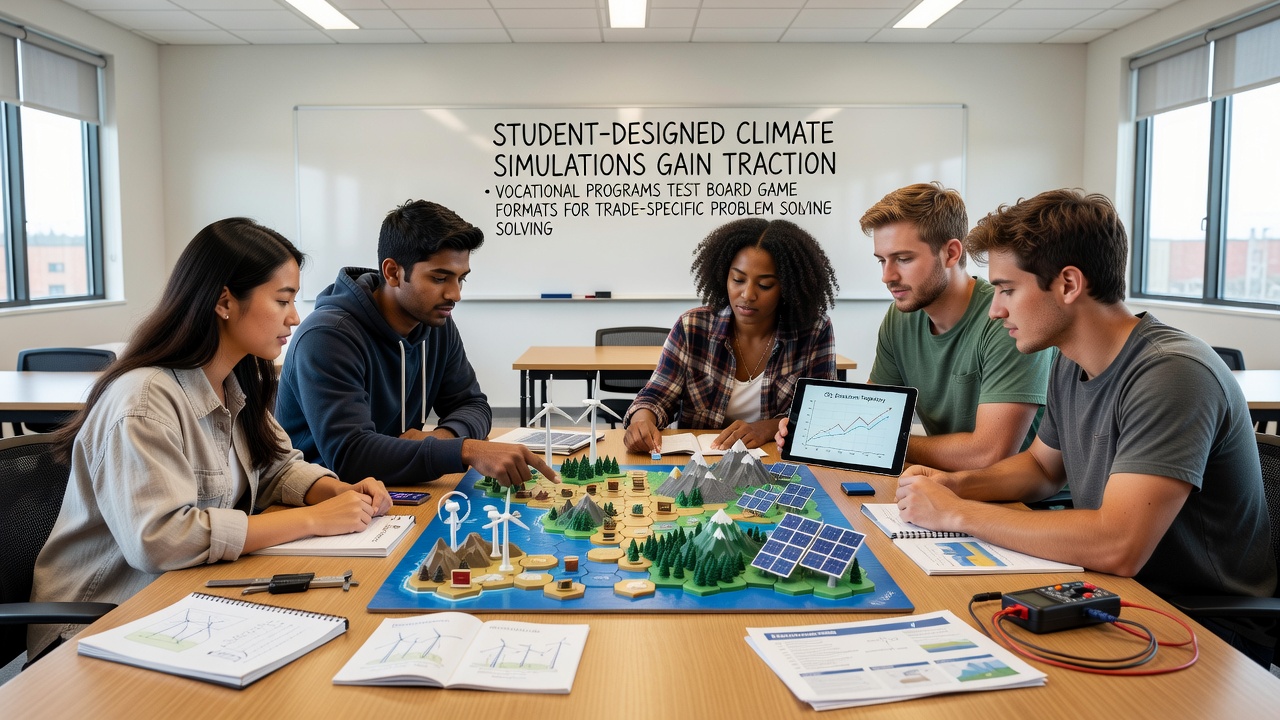
Sage Becker · 5 October 2026
Vocational Schools Test Student-Made Climate Board Games for Practical Trade Challenges
Vocational programs across multiple regions have begun integrating student-designed climate simulations into their curricula through board game formats that target trade-specific problem solving, and data from pilot initiatives show measurable uptake since 2024. These efforts focus on trades such as plumbing, electrical work, and HVAC systems where climate variables like extreme weather patterns and resource constraints directly affect daily operations. Researchers at participating institutions note that the format allows learners to model scenarios involving carbon reduction targets alongside standard installation and maintenance tasks.
Expansion Across Training Networks
Programs in North America and Europe have reported steady enrollment in modules that require participants to prototype games addressing localized climate risks, while Australian vocational centers launched similar trials in early 2025. Figures from Cedefop indicate that over 120 European training providers incorporated game-based climate exercises into at least one trade pathway by mid-2025. The approach combines design thinking with technical skill benchmarks so that students calculate energy loads, assess material durability under changing conditions, and coordinate multi-team responses within the ruleset.
One cohort at a Canadian technical institute produced a game simulating flood response for electricians, requiring players to reroute circuits while accounting for rising water tables and supply chain delays. Data collected during play sessions showed participants improved their accuracy on related practical assessments by 18 percent compared with control groups using traditional case studies.
Design Process and Trade Integration
Student teams typically begin with field observations of their chosen trade, then translate those observations into mechanics that reward efficient resource use and penalize high-emission shortcuts. Instructors report that this mapping exercise reinforces both climate literacy and core competencies such as blueprint reading and safety protocols. October 2026 has been identified by several consortia as the target for a coordinated rollout of shared rule templates that allow programs to adapt existing prototypes to regional regulations without starting from scratch.
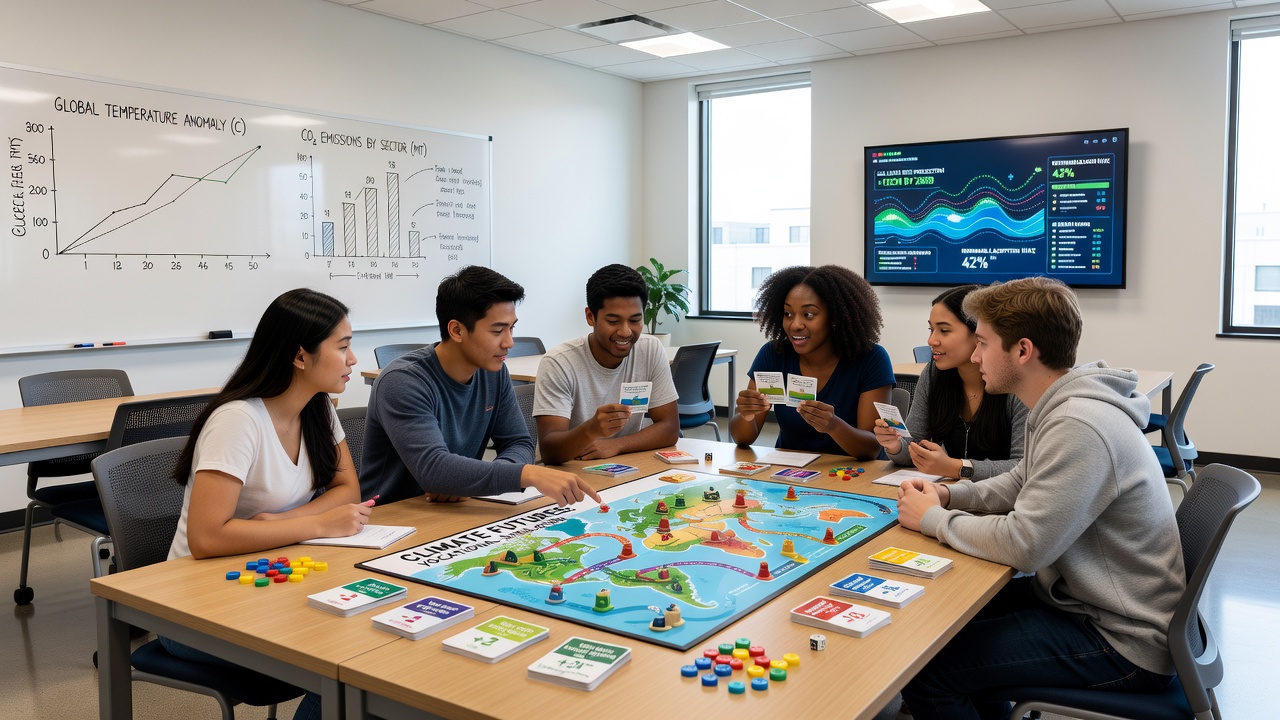
Assessment frameworks developed by these programs track both game design quality and downstream performance on certification exams. A 2025 study coordinated by the National Center for Education Statistics tracked 450 learners across three trades and found that those completing the simulation modules demonstrated stronger application of climate adaptation strategies during practical evaluations. Observers note the games also surface gaps in supply knowledge, prompting instructors to adjust lecture content in real time.
Cross-Regional Data and Shared Resources
Shared digital repositories now host rulebooks and component files from multiple countries, enabling programs to compare outcomes while maintaining alignment with local building codes. European providers have contributed modules focused on retrofitting older structures for heat resilience, whereas North American partners have emphasized grid stability during storms. These exchanges occur through established vocational networks rather than centralized mandates, which keeps development responsive to specific trade requirements.
Industry partners supply authentic data sets on material performance and emissions benchmarks that students incorporate into card effects and scoring systems. This input helps ensure the simulations reflect current trade realities instead of abstract models. Programs that have run multiple iterations report declining development time for new prototypes as students build on earlier designs.
Conclusion
Vocational programs continue to refine these board game formats as evidence accumulates on their utility for embedding climate considerations into trade training. The student-driven element keeps content aligned with emerging challenges while the structured play format supports consistent skill measurement across cohorts. As October 2026 approaches, participating institutions plan joint evaluations that will inform broader adoption guidelines for climate-integrated vocational pathways.